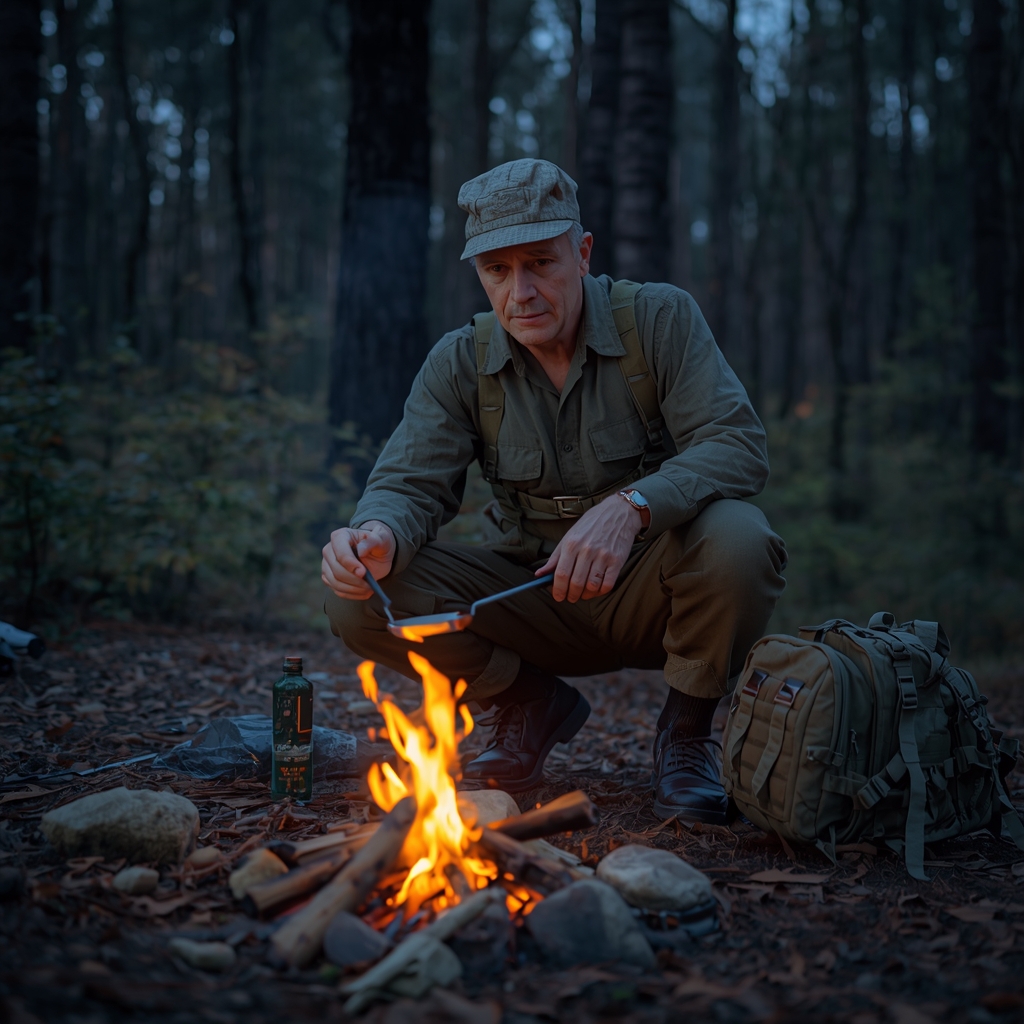
I’ve been in places where supply lines vanish overnight.
In the field, you don’t get a warning. One day the resupply helicopter arrives. The next day it doesn’t ‚You make do with what’s in your pack. I learned early in my commando days that the difference between those who panic and those who adapt isn’t luck. It’s preparation done before things go wrong.
Right now, watching the news, I’m getting that same familiar feeling.
The US-Iran conflict that erupted in early 2026 has done something most people in comfortable Western countries haven’t experienced in their lifetimes: it’s made the fragility of our supply chains impossible to ignore. The Strait of Hormuz, a narrow stretch of water that roughly 20 million barrels of oil pass through every single day ‚ has been effectively strangled. Shipping has collapsed. Fertilizer exports from the Gulf have dropped off a cliff. Food prices are already moving.
This isn’t fear-mongering. This is what happens when a chokepoint closes.
And if you’re reading this thinking it won’t reach me ‚ I’d gently suggest you rethink that.
Why This Crisis Is Different
Most supply shocks are temporary. A storm, a strike, a pandemic. They hurt, then they pass.
This one has a structural problem that’s harder to fix: fertilizer.
The Middle East accounts for roughly 42% of global urea exports and 27% of global ammonia ‚ two of the core ingredients in the fertilizers that grow the food on your table. With the Strait of Hormuz effectively shut down, those shipments have stalled at exactly the wrong time. Planting season. The window when farmers need inputs, not shortages and price spikes.
Nitrogen fertilizer benchmarks have already jumped 25‚ 50% since the conflict began. That doesn’t hit grocery shelves immediately. It hits them in 6‚12 months, when last season’s harvests run thin.
You have a window. Use it.
What I’d Do Right Now
Let me give you the same logic I’d apply in the field: water first, food second, information third.
1. Water
People dramatically underestimate how fast water becomes the primary problem in any crisis. Municipal water systems rely on electricity, chemical treatment, and supply chains for maintenance parts. If energy gets expensive or scarce, water systems get stressed.
What to do:
– Store a minimum of 1 gallon per person per day, targeting 30 days of supply
– Invest in a gravity-fed water filter (Sawyer, Berkey, LifeStraw Family) ‚not just bottled water
– Know where your nearest natural water source is and how to make it safe to drink
– Learn the SODIS method (Solar Disinfection) as a zero-cost backup
The rule I lived by in the field: if you’re thirsty, you’re already behind.
2. Food ‚Stock Smart, Not Scared
Panic-buying pasta and canned beans is better than nothing. But there’s a smarter way to build a food buffer.
The 30-60-90 Rule:
– 30 days: Focus on what you already eat. Rotate it. Buy one extra of everything.
– 60 days: Add calorie-dense staples ‚ rice, oats, lentils, dried beans, cooking oil.
– 90 days: Think long-term storage. Freeze-dried meals, honey (lasts indefinitely), hard liquor (barter value and antiseptic).
Calories over variety in a real shortage. A 90-day supply for one adult is roughly 200,000 – 270,000 calories. Know your numbers.
The current crisis is forecast to push global food inflation to 4‚5% through late 2026 and into 2027, with the impact hitting retail prices with a significant lag. You’re not buying for a zombie apocalypse. You’re buying a time buffer while prices spike.
3. Energy Independence
Modern households are shockingly dependent on grid power for everything ‚ cooking, heating, communication, water pumping. When energy prices surge (oil was up 15%+ within days of the conflict starting), this dependency becomes expensive fast.
Realistic steps:
– A propane camp stove with 4‚ 6 spare canisters gives you 3‚ 4 months of cooking backup
– A solar-powered power bank keeps phones and radios charged
– LED lanterns and headtorches (with spare batteries) cost almost nothing
– A small wood-burning rocket stove is a one-time investment with zero fuel cost if you have access to any outdoor space
I cooked on a hexamine tablet stove for two weeks in northern terrain once. You adapt. But having something beats improvising under pressure.
4. Cash and Barter Items
In every crisis I’ve witnessed ‚ and I’ve been in a few‚ electronic payment systems become unreliable before anything else. ATMs run out. Card networks go down.
Keep physical cash. How much? Enough to cover 2‚ 4 weeks of expenses.
Barter items that hold value in scarcity:
– Alcohol (spirits in sealed bottles)
– Medications (paracetamol, antibiotics if you can obtain them)
– Fuel
– Matches and lighters
– Coffee and tobacco (underrated)
This isn’t prepper fantasy. It’s how informal economies actually work when formal ones stall.
5. Information and Community
The most undervalued survival asset is a reliable network of people around you.
Know your neighbours. Seriously. In every scenario where communities come through a crisis, they do it together‚ not as isolated households. Who has medical training? Who has a generator? Who has agricultural knowledge?
For information, don’t rely on a single source. Have:
– A battery or hand-crank radio for emergency broadcasts
– Saved offline maps on your phone
– A physical notebook with emergency contacts, local resources, and essential information
What I’m NOT Saying
I want to be clear: I’m not telling you to build a bunker or prepare for civilizational collapse.
The June 2025 12-day conflict that preceded the current escalation left no measurable impact on global food security indicators‚ because it was short. The analysts are right that a short conflict, resolved quickly, gets absorbed by existing buffers.
But the question isn’t whether this specific conflict causes a catastrophe. The question is: if a disruption did hit your household, how long could you function normally?
Most households in developed countries: 3‚ 5 days.
That’s not a survival strategy. That’s a single bad week away from scrambling.
The Old Ranger Mindset
In the commando world, we had a phrase: hope for the best, plan for the worst, and don’t be surprised either way.
Preparedness isn’t pessimism. It’s the opposite‚ it’s the thing that lets you stay calm when everyone else is panicking. It’s what lets you help your family, your neighbours, and yourself when systems temporarily fail.
The supply chain disruption caused by the Iran conflict is a loud reminder of something that’s been true forever: the infrastructure of modern life is more fragile than it looks, and the people who fare best in any disruption are those who thought about it before it happened.
You don’t need to be an ex-commando to be prepared. You just need to start now.
Have questions about building your emergency supply list? Drop them in the comments below. And if you’re just starting out with outdoor preparedness, check out our survival category for more practical guides.